
Field Repair Checklist for Broken Implements is a common question for customers trying to reduce downtime and plan repairs before a small issue turns into a bigger interruption.
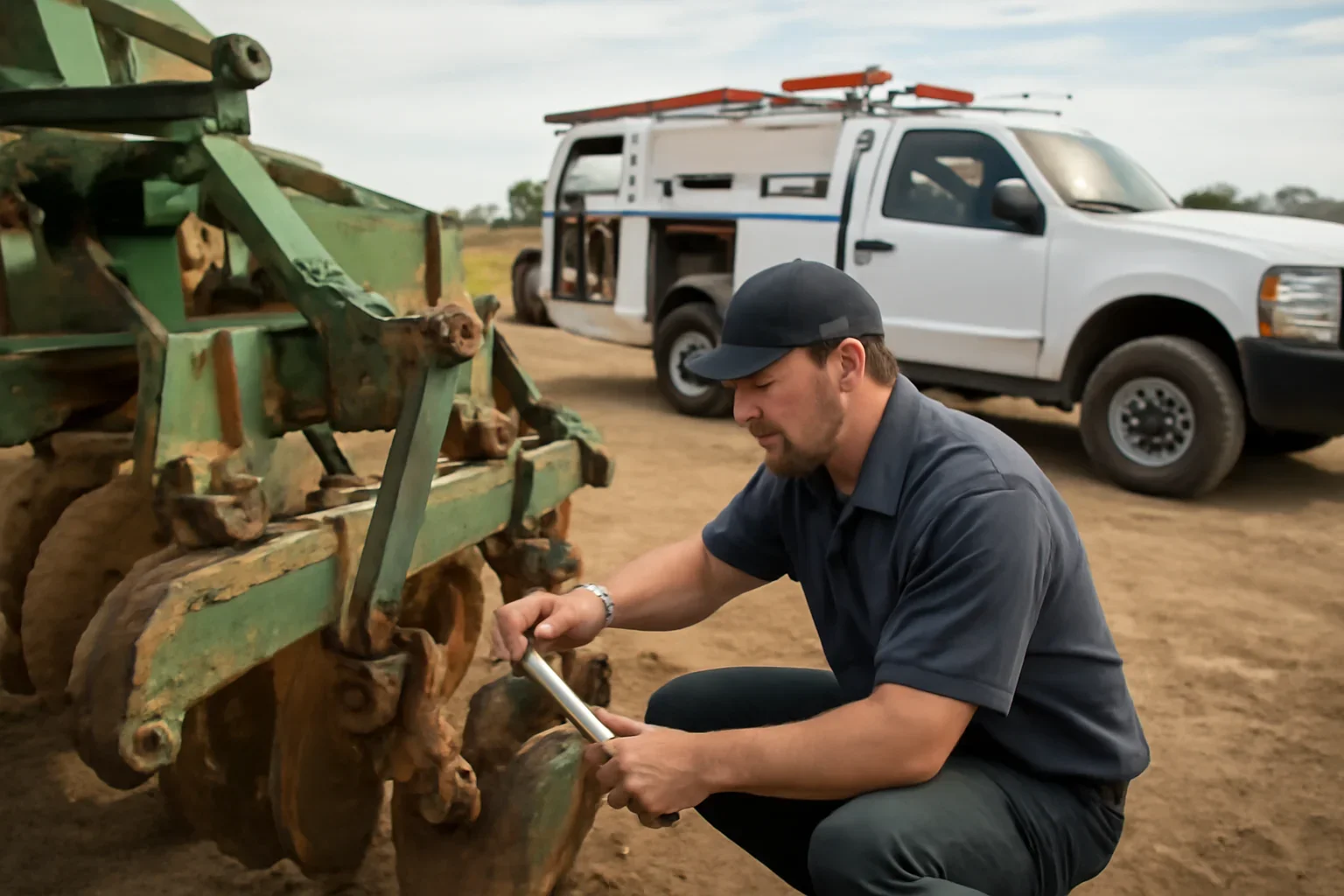
When equipment fails unexpectedly, the safest and most useful first step is to stop work and secure the area. Shut the machine down, keep people clear of moving or unstable components, and avoid restarting equipment that may have structural, hydraulic, or drive-related damage.
Good information helps service move faster. Take clear photos, note any warning lights or visible leaks, write down what the machine was doing when the failure happened, and share the exact location if the equipment is in the field or on a jobsite.
The goal before help arrives is not to improvise a risky repair. It is to protect people, prevent added damage, and make the response more efficient. If parts are loose, fluid is leaking, or the machine could shift unexpectedly, keep it parked and wait for direction before anyone works around the failure.

Changes in performance, visible damage, repeat minor issues, and missed service timing usually matter more than a single isolated symptom.
The earlier a problem is reviewed, the more likely it is that service can be planned instead of forced into a crisis window.
A short description and a few photos often help move from uncertainty to a workable service plan.
Not until the issue is understood. Continuing to run damaged equipment can make the repair larger and create safety concerns.
Machine type, location, what changed, visible damage, photos, and how urgent the downtime is.
If this topic sounds like the issue you are dealing with, share the machine details, photos if available, and how urgent the downtime is.